

06.04.25 media roundup
Notes on pushing boundaries, AI art, fascism, femininity, and more.

Welcome to this week's installment of media I consumed instead of doomscrolling! You’ll start to notice a common thread between the various pieces here. This week I was particularly drawn to the intersection between the digital world and art. I think I may have ended up with more questions than answers, but ultimately I found some very interesting pieces. Hope you enjoy <3
Video essay observing contemporary artistic perceptions and how they are worryingly failing the human condition and proposing what can be done to fix it.
This video took me by surprise. I didn’t really know what it was going to unpack, but every second of it was incredibly rich in arguments. I kept having to pause just to reflect on my own perceptions of the matter. The thought of understanding my view on art as this overlapping, multi-layered spectrum made a lot of sense to me in theory. However, in practice, I see how we are generally failing.
There is far too much to examine here, and even though I found some arguments stronger than others, what stayed with me is the fact that it is essential to detach ourselves from our collective obsession with categorization. Opening our minds beyond capitalist, class-bound, restrictive narratives creates space for curiosity, discovery, and appreciation for art in all of its forms.
ChatGPT’s Ghibli filter is political now, but it always was on The Verge
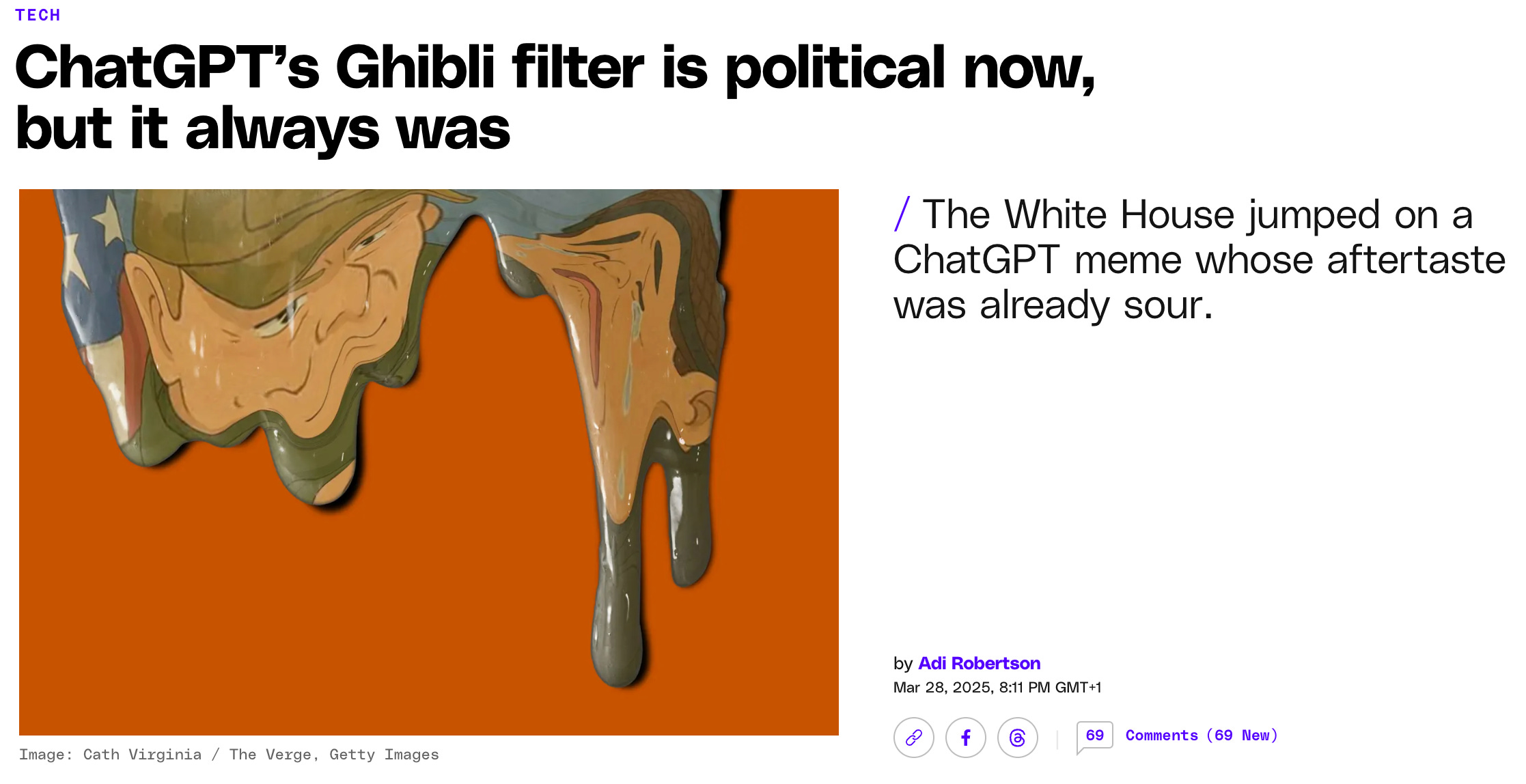
Essay examining the ethics of AI art, particularly in politics, as the White House jumps on the ChatGPT Ghibli filter trend.
AI art is, to me, in Miyazaki’s words, “an insult to life itself”. So this whole trend has been a slap in the face to the blood, sweat, and tears that real art entails. The discourse that has been going on online saying that AI art makes art accessible is such an insult to the challenges that have birthed artists across history. Furthermore, when we see the current US administration taking part in it, I think it’s clear where the morality of it lies. I believe the essay lays everything out quite clearly, and for me, it sparked further questions.
This leads me to the rise of the “memefication” of very serious real life issues. I understand the internet is a place where people often find refuge from the atrocities of reality, and using internet slang, memes and skits to be able to deal with it is a very reasonable coping mechanism. However, when we create a space where the White House feels comfortable enough to post an AI-generated detained crying immigrant in the style of studio Ghibli, perhaps we should re-evaluate our choices. There are spaces to be unserious but when we use language that undermines the value and gravity of our problems, we are slowly but surely desensitizing ourselves from reality.

Substack post discussing the importance of questioning the unassuming branches created by oppressive systems in order to deconstruct them within ourselves and dismantle them in the long run.
This deeply resonated with me, as I often find myself being a person willing to question things that others try to stay away from. I call out my parents if they use a word I believe is wrong. I ask why the sexist joke was meant to be funny. I get into political debates with men on nights out. Not to say I’m necessarily right, but rather to say that I find it so important to create space for dialogue in which we can evaluate the validity of the roots of things we have been raised to internalize.
The author unpacks an array of topics such as sobriety, low-maintenance friendships, de-centering celebrities, desensitization, laziness and more. All beautifully analyzed and discussed, so I won’t talk about them here, but it does raise the question for me, and I hope for you as well, what do I really find that deep?
Podcast exploring the dangers of reading too much or taking too many actions, as well as how to balance theory and practice and turn what you've read into concrete actions.
As someone who consumes a lot of media (perhaps more than I should), this podcast was something I needed to hear. I often find myself overwhelmed by the amount of information I absorb, as I don’t always know exactly what to do with it. The podcast doesn’t necessarily provide a solid answer to this matter, however, it does guide you to be able to evaluate yourself and reflect on your personal experience.
More than anything, it served as a reminder of being mindful not only of what I consume, but of all of the amazing tools I have acquired throughout my life to be able to navigate this ocean of information we exist in. Ultimately, this balance of theory and practice that he refers to really is the key, and to me, these must be balanced on the foundation of my personal beliefs and values.
Art by Algorithm on Aeon
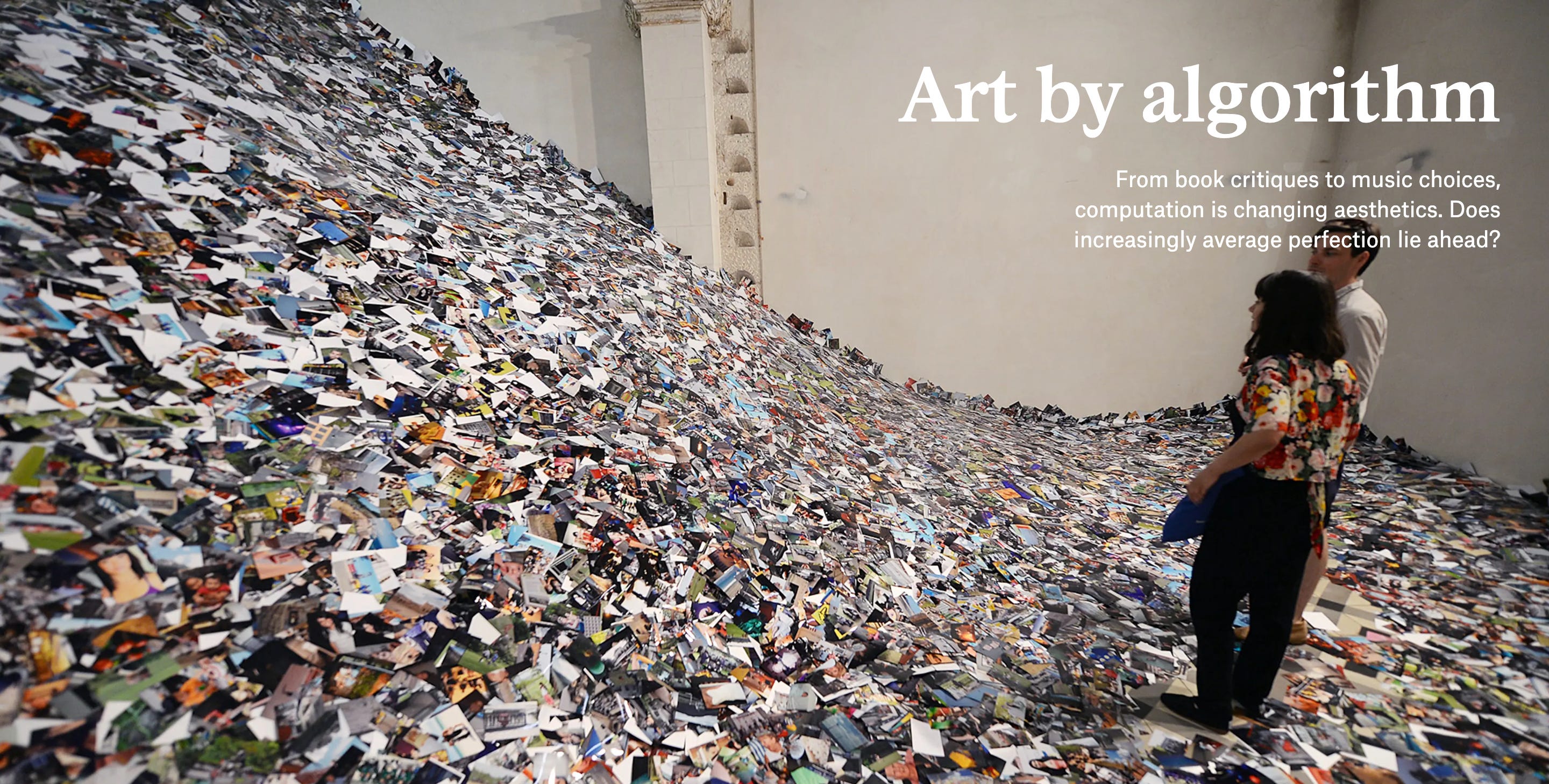
Essay analyzing computational systems’ place in the world of art, how their evolution has transformed our media consumption and the importance of the human factor within the system.
This essay was so insightful, I think it really put into perspective how media used to be consumed and how there has been this continuous entanglement of computational systems to the point we can’t even detect its role anymore. We have gotten far too used to it. Here is a quote from the essay that captures this idea better than I could: “We rely on computational systems for our essential aesthetic vocabulary, learning what is good and beautiful through a prism of five-star rating systems and social-media endorsements, all closely watched over by algorithmic critics of loving grace.”
Some times when I read these types of essays regarding tech I end up feeling slightly hopeless, but this one framed the future of this phenomenon in a really interesting way. The “surprise factor” that humans bring to the table made me understand that no matter how genuinely advanced these systems get, we will always be the most important piece of the puzzle.

Substack post highlighting how today’s concerningly rigid beauty standards serve as a control tool for fascist ideals and how this is tied to women’s self-worth.
This is something that has been floating through my mind the past few months, and this piece put all of my discombobulated, fragmented ideas into words in such a brilliant way. Especially now that we are seeing the rise of conservatism in our generation, particularly perpetuated by social media, I think it is essential to have this conversation to be able to get some perspective and snap out of it.
It is so concerning how undetectable this feels. Often we think of fascism as these outward acts of violence and transgression which, of course, are actively happening, but we neglect these underlying narratives that create room for compliance. I have gotten better at identifying these trends. I use my “not interested” button on TikTok liberally, but it is an ongoing process in which we all must question the content that is being pushed onto women to be able to deconstruct our survival mechanisms and not fall victim to these fascist systems.
Rachel Cusk — The novelist on the “feminine non-state of non-being” on The Yale Review
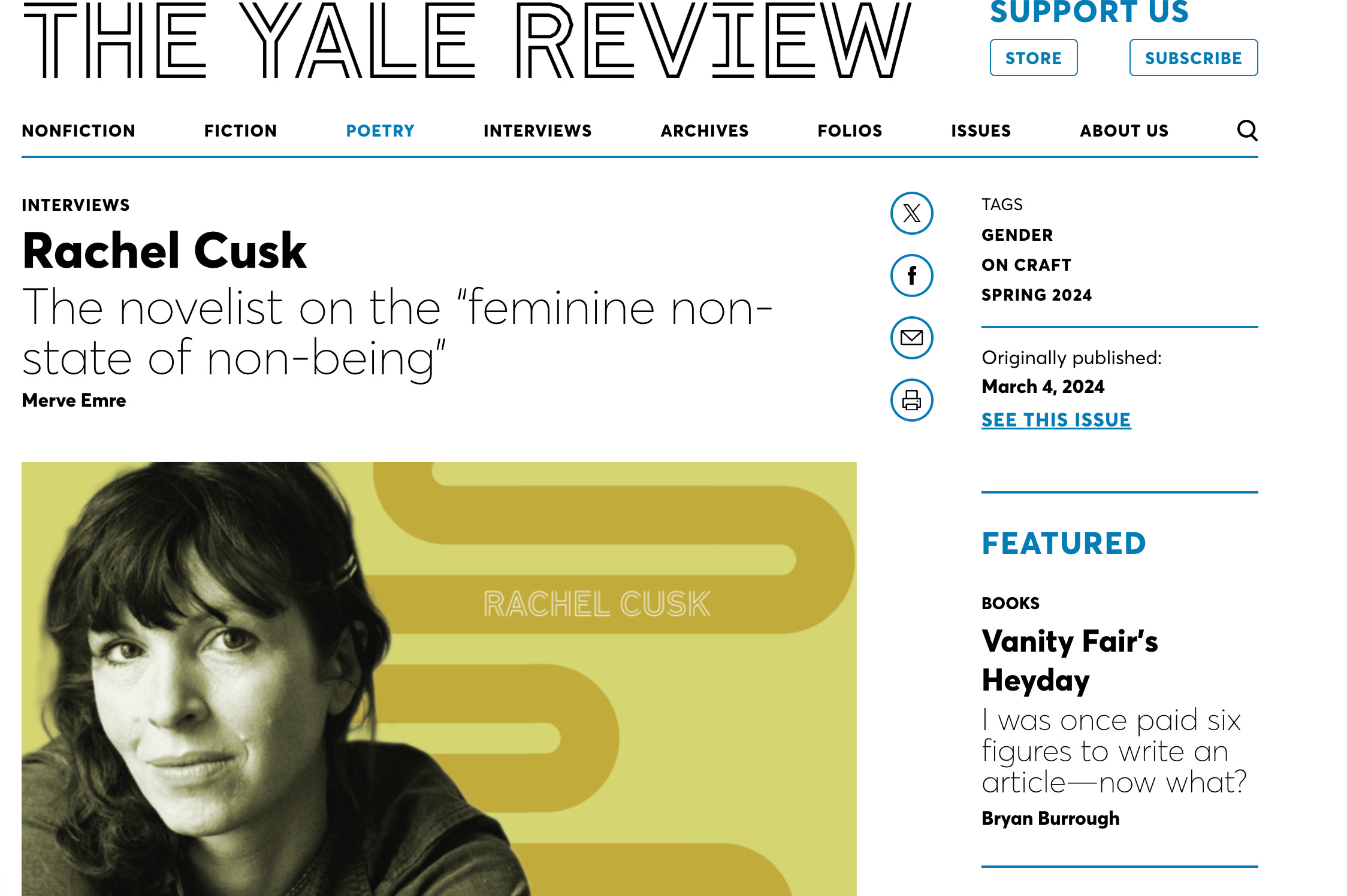
Interview featuring British author Rachel Cusk where she dissects her book “The Second Place” regarding gender, freedom, aging and more.
I love Rachel Cusk. Her ability to create depth and complexity from the mundane is outstanding. I always enjoy reading interviews from authors I like as I get to hear their own narrative first-hand, and not through their characters. This interview was particularly insightful for me.
There are so many things I could reflect on, but what stuck with me is the idea that the experience of being a woman is inherently rooted in some sort of compartmentalization. The woman fragments herself to be able to not only keep up with unrealistic societal expectations, but to separate herself from the space that she is taking up. This goes from being a woman with respect to others, to understanding femininity from a personal perspective. It leaves me to wonder what happens once all of these versions confront each other, and where one's idea of femininity and identity as a woman would lie.
I just need to tell you that, after discovering you on TikTok, you have genuinely changed my life for the better. I'm not even being dramatic. I'm no longer scrolling through dumb videos or posts that make me feel bad. Instead, I'm expanding my mind to consider topics it never would have without your pointers! I can FEEL my brain un-rotting. With all of my heart, thank you❤️❤️