

Finding Meaning Online Instead of Doomscrolling
On experiencing digital and multimedia art to create positive feedback loops through connection.

This post was created in collaboration with CIFRA. All opinions, curation, and creative direction are entirely my own. As always, I only recommend things that I genuinely think you will love :)
How many hours of your day do you spend in front of a screen? And what exactly are you doing during these hours?
I spend around six hours on my phone, give or take, and then between my iPad and my laptop, probably a few more. A couple of years ago, I would have been ashamed to tell you my answer—I mean, there’s a reason I created this space in the first place—but somewhere along the way, I realized my screen time wasn’t the issue. The fact that meaning collapsed was.
There was a lack of meaning in my reality. The future laid out before me, and the one I watched unfold through every screen was not one I wanted to experience. I couldn’t spend enough time with my own thoughts to figure out who I was or what I enjoyed anymore; my love for art, music, philosophy, writing, films, poetry, and everything in between had gone out the window. Nothing really mattered anymore.
For a long time, I attempted to escape existence by sticking this digital pacifier in front of my face, losing track of space and time for long enough to forget about reality for a few hours. Every single day, for years. It felt like living a severed life, one where two halves of a self existed in my body, one physical and one digital; both unable to access the other’s memories. All I knew was that both felt a profound sense of impending doom—in other words, I was doomscrolling.
Doomscrolling is merely one symptom of much deeper systemic issues. As Baudrillard writes in Simulacra and Simulation:
“We live in a world where there is more and more information, and less and less meaning.”
Especially at this moment in history, when the boundaries between the digital and the physical are being increasingly dissolved, consumption, perception, and attention define the conception of our reality—and most of the systems we navigate daily are designed to exploit exactly that. For me, this meant I had to integrate those two versions of myself, jump right into the state of seemingly meaningless entropy, and somehow build a reality worth living for myself. Because who is in charge of designating meaning anyway? I decided it wasn’t going to be an algorithm.
Meaning, to me, is the result of connection, which, frustratingly, has never come easily—my neurodivergent brain wasn’t built to do so in the way some others can. But, as I mentioned previously, I always felt connected through media and art. When the human is at the center, they become the shared language that allows me to connect not only with others—including you—but to all versions of myself.
Once I decided to navigate the digital world rather than letting it navigate me, these all converged in ways I could have never imagined—visual art bleeding into music into film into literature into performance, all finding each other through the digital medium in forms I couldn’t have conceived of separately. Video art, sound installation, interactive media, net art—the boundaries between my rediscovered passions dissolved the same way the boundaries between the physical and digital are. This is how I discovered the universe of contemporary and multimedia digital art.
As wonderful as I found it to be, pieces were scattered all over niche corners of the internet, many of which are overwhelming to navigate due to both volume and inaccessibility—and unfortunately, authorship often got lost in the process. Given that much of it is abstract, conceptual, and experimental work that takes us out of our comfort zones, it’s even more difficult to know where to start.
Thankfully, though, I eventually stumbled upon CIFRA—a human-curated platform where we actually get to experience and integrate this world of digital and contemporary art in our daily lives. This once amorphous distant world is made navigable by centering intentional curation, authorship, and context, to allow us to meaningfully engage with art rather than stay stuck in passive consumption during our time spent online.
We stand at a critical moment in history where the humanities are being defunded, and creativity feels increasingly scarce. The STEM fields are separating themselves from art, dismissing its value in the name of efficiency and so-called progress—as if technology were a replacement for what we can create rather than a tool to amplify it. That’s why supporting artists and the spaces that are actively working against this is more important than ever—and what makes CIFRA particularly meaningful to me. Through CIFRA CLUB, their optional membership, 51% of our subscriptions go directly to the artists.
Finding meaning is at the center of everything I’ve described—but what does this actually entail?
Here’s the framework that allowed me to make sense of it:
Passive consumption dictated by the attention economy, where agency, critical thought, and self-determination are diminished, creates negative feedback loops, where scrolling, disconnection, and meaninglessness remain.
Active consumption led by human connection, creation, and curation allows positive feedback loops to emerge, where personal interrelatedness with the objects of our attention constructs meaning through experience.
At the core of my conception of meaning in this context, I have to ask myself how diversified multimedia interactions can create positive feedback loops. We watch, read, and listen to so many things every day, but these are all futile unless we create connections.
I connect with a piece of media when I am able to fit it into the ever-growing jigsaw that constructs my reality. It connects with me once it fits into the other pieces of the puzzle that have held significance in my life, all filtered through personal experience and perception.
To illustrate this, I curated a playlist on CIFRA where we go on a multimedia art journey of feedback loops between the pieces featured in this playlist and my curated selection of books—an encounter of the digital with the analog as an ode to sense-making through the interconnectedness perceived through my body:
Feedback Loops
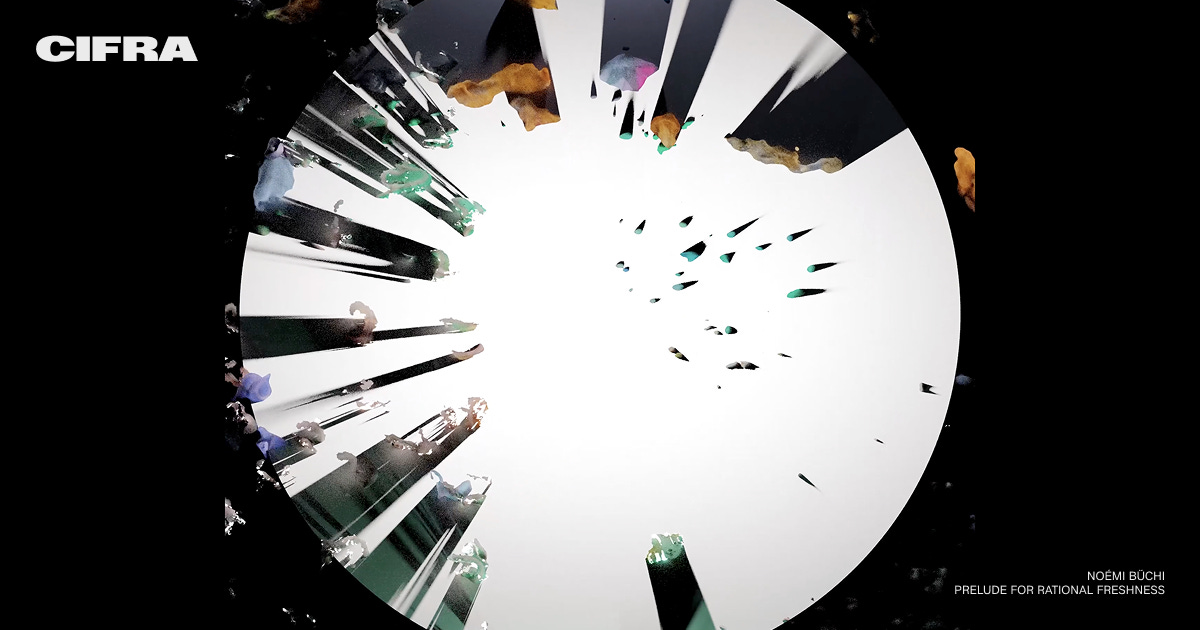
Cosmic Body - Prelude for Rational Freshness - Orbital By Samantha Harvey
Political Body - Object - Gender Trouble by Judith Butler
Systemic Body - Veille infinie - 24/7 by Jonathan Crary
Autonomous Body - re-c(O)unting - Breasts and Eggs by Mieko Kawakami
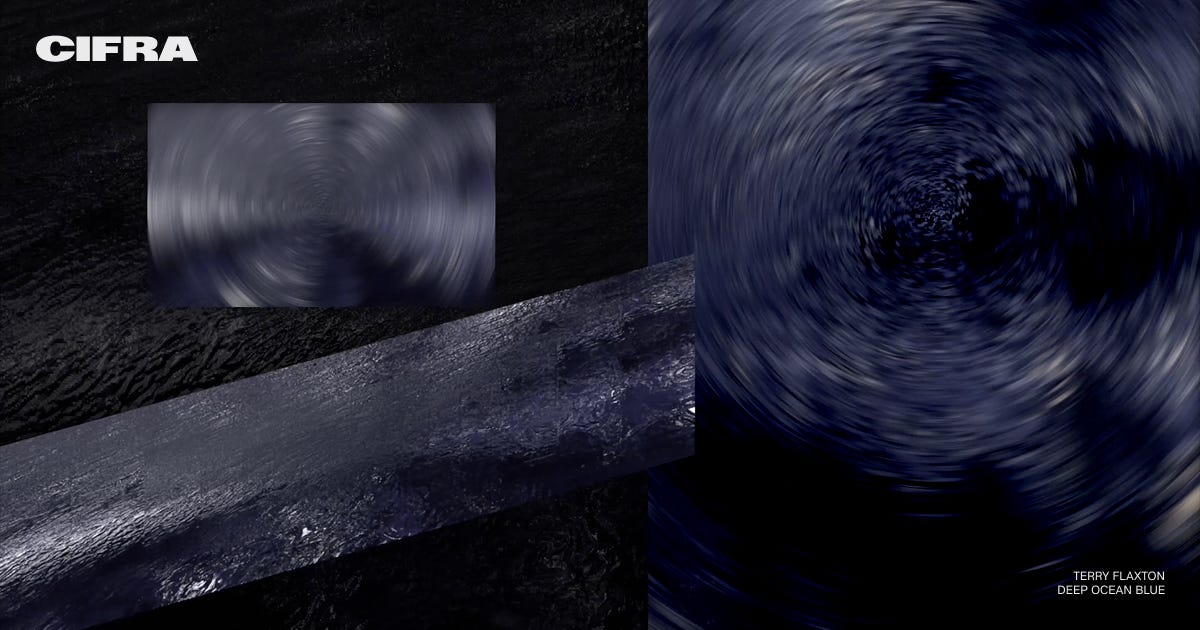
Fragmented Body - Deep Ocean Blue - Bluets by Maggie Nelson
Existential Body - Everything Is Absolutely Fine - Nausea by Jean-Paul Sartre
Contextual Body - This Happened Yet Is Happening - Mythologies by Roland Barthes
Decaying Body - subassemblies - Annihilation by Jeff VanderMeer
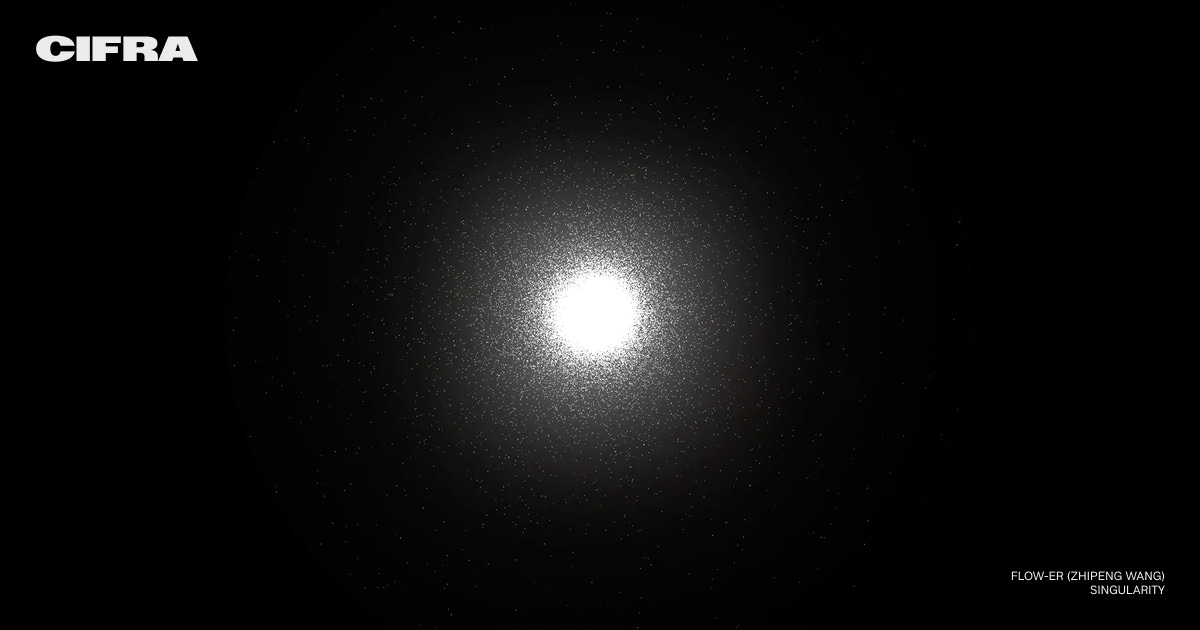
Essential Body - Singularity - When We Cease to Understand the World by Benjamín Labatut
A little piece of myself to inspire you to create meaning when everything around us feels meaningless <3
I wholeheartedly believe that art will always save us—I know it has saved me more than once. If this resonated with you, you can find the playlist here or download CIFRA for free and find Feedback Loops there. And if you want to directly support the artists behind these works, consider joining CIFRA CLUB—51% of every subscription goes straight to them :)
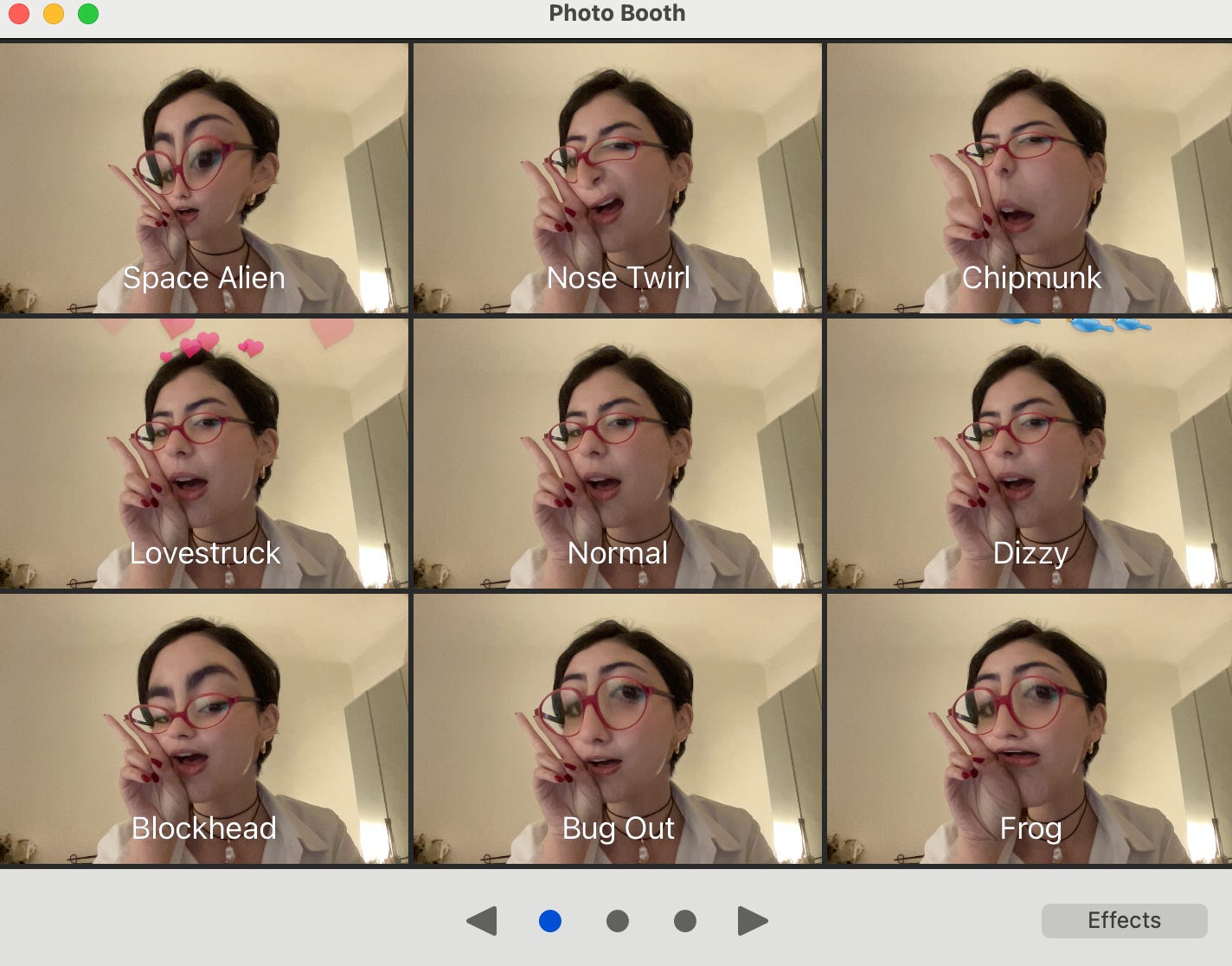
Writing to you with love and also wearing something other than my pjs for once,

Here are some ways to contribute to this community in any way you can꩜
I think the most critical point here is that the problem is not what it appears to be on the surface—“screen time” or “lack of focus.” Shifting our attention from one place to another is often presented as a solution, but in reality, it’s just a relocation of the same loop. Putting down the phone and picking up a book, leaving social media for art… if all of this is done with the same underlying mental mechanism, the outcome doesn’t change; only the content does. That’s why the sense of fragmentation never truly disappears.
The real issue lies deeper. For most of human history, the brain evolved around the necessity of survival. A system that is constantly alert, fast, and responsive to stimuli was an advantage. Today, however, especially in the modern world, that necessity has largely disappeared. Yet the brain continues to operate at the same speed and intensity. What emerges is a mismatch: there is no threat, but the system behaves as if there is.
This drives us into constant stimulation-seeking, shallow consumption loops, and ultimately, a collapse of meaning. What we are experiencing today is not simply a crisis of attention, but a system running in the wrong mode. Unless we truly understand this underlying mechanism, solutions will only change form—while the core problem remains the same.
❤️