

What Does The Creative Process Actually Look Like?
Questions on creative expression, developing our POV, sources of inspiration, sharing our work, and more. An exchange with Erifili from Crystal Clear.


We speak so much of the creative process, of creating over consuming, of being a creative, and so on and so forth—but what does any of this even mean?
This is an ongoing inquiry for me, and I would hope it is for everyone reading. The act of creation is something inherently personal and ever-evolving, intrinsic to every single one of us.
In an attempt to enlighten not only my personal practice, but in hopes of doing so with your own, I reached out to the brilliant Erifili Gounari to exchange thoughts and inquiries about each other’s creative process. She’s the writer behind crystal clear, a publication that has been part of my journey long before I started my own. When it comes to creating, in every sense of the word, she’s someone I really look up to. If you haven’t yet, I highly suggest you check out her work <3
During a really lovely conversation, we noticed that our mutual understanding of the creative process is that the most valuable element is always our unique personal perspectives—something every single one of us has.
To illustrate this, we decided to send each other a few questions that would allow us to further explore what this process can actually look like, seen and asked through our different POVs.
A big thank you to Erifili for collaborating with me on this piece, and I hope you get to learn as much as I did <3
-Mapu
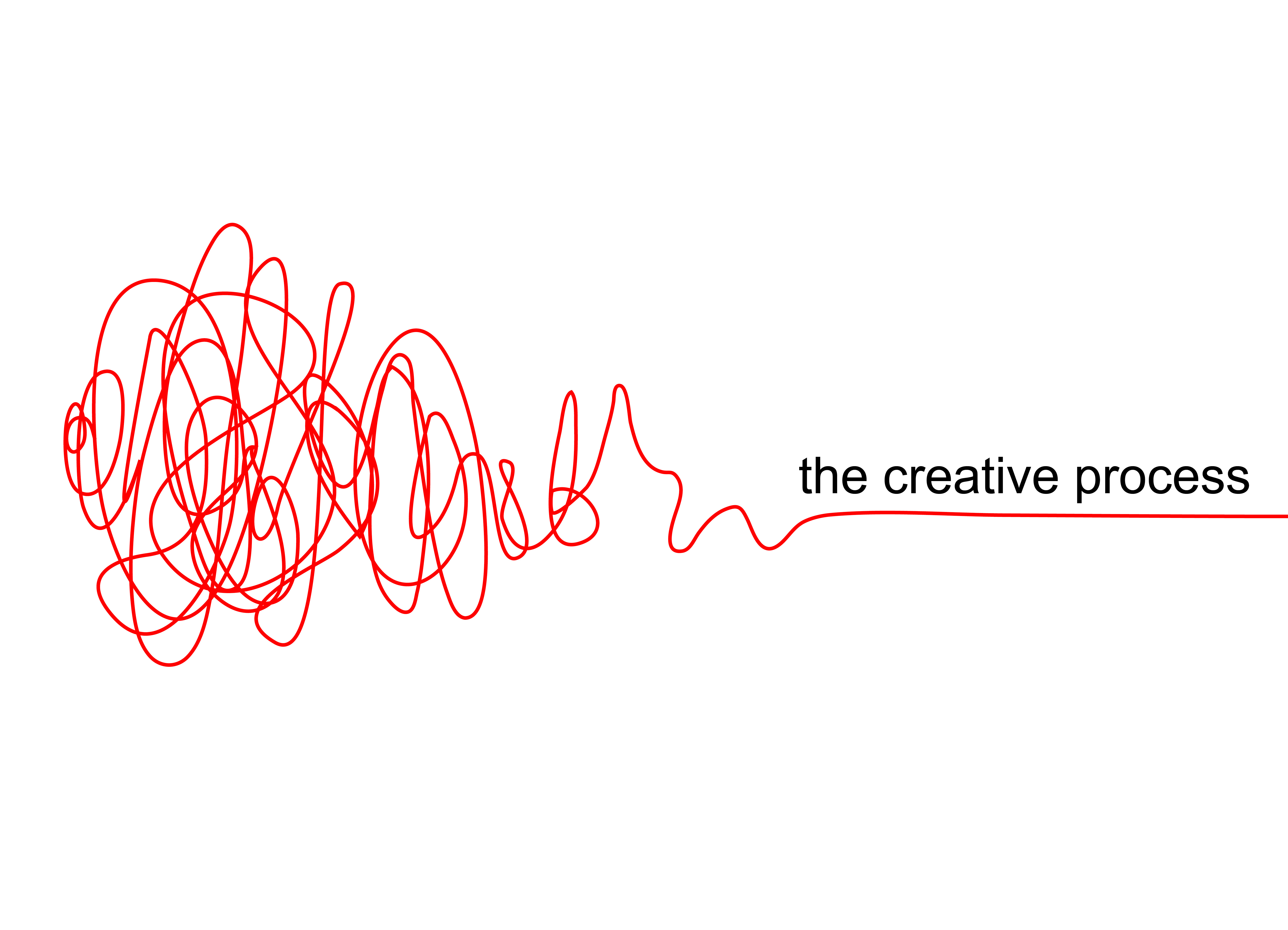
as a creative exercise, i invite you to answer the questions that intrigue you the most along with us, and make note of the ideas you find to be the most meaningful to your own process, practice, and lives :)
M: If you were an alchemist, which elements would you say make up your creative process? Is there a way in which you mix, or not, mix them together?
E: I love this question because I do see creativity as a process of alchemy in many ways! My own creative process includes a mix of: whatever big question I’m pondering these days, the things I am experiencing lately, any inspiration I draw from the books I’m reading and from my environment. I definitely do feel like I mix everything together and it’s often hard to tell where an idea came from, only that it materialised at the perfect time out of thin air as the result of all these different elements. The creative process feels so abstract but it’s what teaches me to trust in uncertainty!
M: Beyond writing, where do you find yourself gravitating toward to manifest your creative expression?
E:Photography has always been a huge passion of mine! I used to work as a music photographer and then got very interested in dreamlike travel photography, that you can see here. It’s a lifelong love and one I don’t think I’ll ever stop engaging in. Although I’m a writer, I’m a very visual person and I love creating beautiful things!
M: Where or how do you set the boundary between outward facing creative projects versus ones for yourself?
E: Sometimes, there are things I want to express creatively or write about that definitely feel too personal to share; but the act itself of writing about them creatively, feels so rewarding to me, that it doesn’t need to have a ‘point’. It feels fulfilling and inspiring and it stretches my creativity to new points. I think creativity for its own sake is so important, and even more so to maintain if you’re someone who shares their creative work online for an audience.
M: What advice would you give to someone who is scared to share their perspective because they feel like everything has already been said?
E: The age old question! I’ve written about this before, as I very deeply believe that we can learn something from anyone, including you; and that comes from the fact that you, and I, and everyone else passing you by on the street, has something to say in a way that only they can express. We stress about finding these ‘original’ ideas, but really, anything you create authentically, anything you say because you want to say it, will by definition be unique. Your unique amalgamation of experiences, tastes, influences, beliefs, and values, is one in eight billion; it doesn’t matter if something you want to talk about has been talked about by others before, because it hasn’t by you. Maybe the way you personally express it will resonate with someone that needed to understand it through your very personal lens.
I think that’s where the secret to creative expression lies. There is no real competition when your main goal is to find and bring to life your own personal most creative expression. The point of creativity is not to share a perspective that’s never been shared before. It’s to create what feels fun and engaging and true to you!
make sure to subscribe <3
now onto my answers!!
E: What motivates you to write?
M: I have found that writing, for me, is more than anything, a calling. The drive to construct and share meaning through the shape of words has been innate, though dulled and abandoned for many years of my life. I remember the only time I ever truly cared about my nightmarish first school was when I got the chance to write poetry; I felt the most myself I ever had.
In a way, writing has always been a vessel for connection for me. It started as a way to connect with myself in an attempt to understand my place in the world—it has allowed me to ride the waves into the uncertainty that exists within and around us. Even though it definitely feels rewarding and motivating to have the privilege of connecting with others as my words are read beyond my own eyes, I always make sure to ask myself who am I doing this for? whenever I’m about to embark on a new piece—if I realize I’m doing it mostly for someone else, then it’s simply not meant for me.
E: What (or who) are your biggest inspirations as a creative?
M: Something that became truly ingrained in my creative process when it comes to inspiration during my years in fashion school is that inspiration is found pretty much everywhere but the field of practice itself. What does this mean? Let’s say I’m coming up with a collection; I will never find the most interesting ideas just by looking at other designers’ work, but through lived experience and unexpected connections instead. The same thing applies when it comes to writing—especially online.
In this order of ideas, my biggest inspiration is definitely nature, my interactions with it, and the mystery of it all. Another huge—perhaps unconventional—inspiration for me is the things that upset me about the world. This could be seeing the world seemingly falling apart through the news or the algorithm, conversations with people I never want to be like, and even the parts of myself that I’m not happy with. Identifying this lack is the very thing that powers the creative desire to do something about it. For example, my disastrous doomscrolling habit and the dire reality that I constructed through it were exactly the turning point for me to create IOD in the first place.
i have explored desire and creativity previously, you can find that research here!
However, I believe that finding inspiration is just a matter of noticing what stays with us through our interactions with everything around us: from films, shows, videos, music, books, and essays, to people, experiences, places, dreams, conversations, and anything that crosses our minds and our paths. It’s about both surrendering to our current reality and making sure to walk toward the one we are inspired to build.
E: How does your creative process look like day to day?
M: It’s quite easy to lose ourselves in abstract thought when speaking of creativity, but if I were to dilute it to its very essence, my creative process is—first and foremost—rooted in my desire for growth. It’s about pushing myself to the edge of my comfort zone to expand it, over and over again.
I’ll give you an example to illustrate. A few weeks ago, I was staring at the fireplace in my living room while chatting with my dad. I probably didn’t pay enough attention during science class so I found myself wondering: what’s fire’s state of matter? Turns out it’s plasma. For some reason, this struck me so much that I knew I had to dive deeper to figure out why this felt so important to me. I began reading more articles about it, then revisiting artwork, past writings, and older inspiration that connected with my current train of thought.
By having this initial framework built through current inquiry and past exploration, I could now dive into the more challenging phase of the process, and actually going through with it. In this case, I read Fragments of A Poetics of Fire by Gaston Bachelard, which was far from an easy read, but it opened my mind up to a whole other realm of possibilities.
I still don’t know where this might lead me just yet, so I know I have to keep digging. If you want to take a look at what I’ve gathered so far, you can find it on this Sublime Collection :)
E: What has the process of finding your unique POV/creative voice been like for you? Was it clear from the beginning or did you find yourself experimenting?
M: This process has been everything but linear. I believe that, for me, it has been a process of building rather than finding—and yes, a LOT of experimenting. I can picture it as a house that is always under construction; the foundations weren’t always there, so at first, the structure kept falling apart because I tried to replicate through my reference pictures rather than creating something genuinely mine. Once I realized I needed the right base and tools to deconstruct and reconstruct this building from its very rubble, I could finally spend long enough inside it for it to start feeling like a home rather than a house. As I mentioned though, it’s never quite finished, so I’m constantly adjusting, expanding, and changing it to make sure I fit within it as I continue to grow.
E: What advice do you have for anyone just starting out with writing and putting themselves out there creatively?
M: I would say that, especially as you find yourself in search and in front of an audience, to not lose yourself in the performance. Validation can feel so rewarding but if that’s all you’re searching for, you’ll quickly realize not just how unsustainable it is, but how emptying it feels to put on a show of being something you’re not. My mantra when it comes to my personal practice is to make sure that I’m always sharing and creating from a place of devotion over discipline.
END NOTES <3
it feels like such a full-circle moment to be able to connect and collaborate with someone whose work i’ve admired and followed for a while. i think one of her pieces was actually part of the first media roundup i ever put together on my tiktok (which i’m returning to very soon i swear), which inspired me to create this very publication.
there is so much discourse on creativity, and i noticed that, as per usual, it’s being largely driven by this hustle-culture, optimization-driven narrative. i knew that i wanted to start diving deeper into this because, ultimately, the creative process is my way of understanding and navigating life. if i were to create a venn diagram of my life and my creative practice, it would be a circle lol. expect to see more work covering this over the course of the next couple of months :)
thank you for your attention,
 | A guest post by
|
Honestly such a joy doing this with you!!! ❤️
I’m a simple woman. When Mapu says “subscribe to Erifili Gounari“, I subscribe to Erifili Gounari.