

When We Stop Performing
Notes on Die My Love, Lynne Ramsay’s latest film.

What happens when we stop performing? With all the online discourse about being performative lately, this question has been lingering in the back of my mind. In Lynne Ramsay’s latest film, Die My Love, we get a raw and visceral glimpse into what slipping our masks off might look like. Featuring exhilarating performances by Jennifer Lawrence and Robert Pattinson, the film follows a hopeful and passionate young couple—Grace and Jackson—after they move from New York to the countryside. We watch Grace navigate motherhood, marriage, sexuality, and family life as she grapples with her sense of identity, which begins to unravel as she rejects expectations. I find that so many of the films that genuinely stay with me—such as this one—are often found on MUBI, a space curated with excellent films that remind me why I fell in love with cinema in the first place.
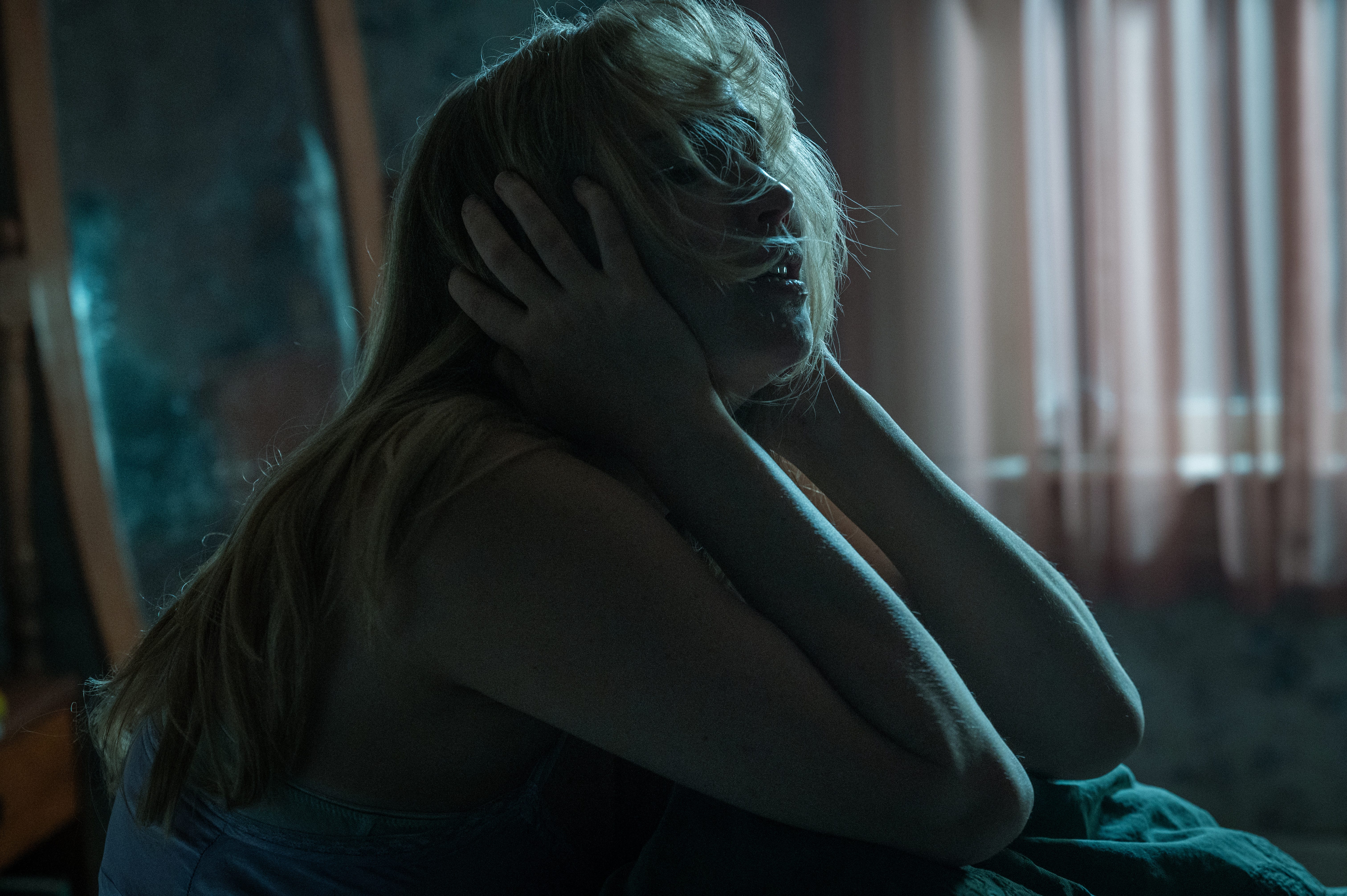
We humans pride ourselves on the premise that we are civilized, superior beings, capable of dominating the world, because we have transcended this animalistic threshold through our capacity for inhibition. The resistance of instinct often holds us captive through societal pressure; it keeps us compliant and obedient, making sure that we are profitable to the systems that were not built for us. Grace’s nature perfectly illustrates both sides of this double-edged sword; we see what this pressure can do to a person—especially as a mother and wife—and what happens when the breaking point is reached.
You know how people often say we should learn to tell anxiety from intuition? Watching Grace break loose from her carefully arranged life made me wonder: how do we tell impulse from instinct? In her, you can’t discern one from the other—her behavior teeters between self-destruction and self-preservation. Her world is held up by expectations in which others project an image of softness, nurture, and servitude—her nature is anything but.
The more she was being bent into these restrictive and isolating roles, the closer she got to a visceral breaking point. This immediately reminded me of hysteria—a term originating from the Greek word Hystera, meaning womb or uterus—which was historically diagnosed in women exhibiting a wide range of symptoms that resisted medical categorization. These symptoms often seemed to coincide with deviations from imposed social and domestic roles; refusing to perform within these confines resulted in the label of “crazy” or “hysteric.” This diagnosis, in its historical distortion, was merely society’s way of naming the immense force of an innate, almost animalistic drive that refuses to be tamed. As I see it, impulse and instinct become inseparable when we stop performing, dissolving into pure essence, but inevitably leading to isolation
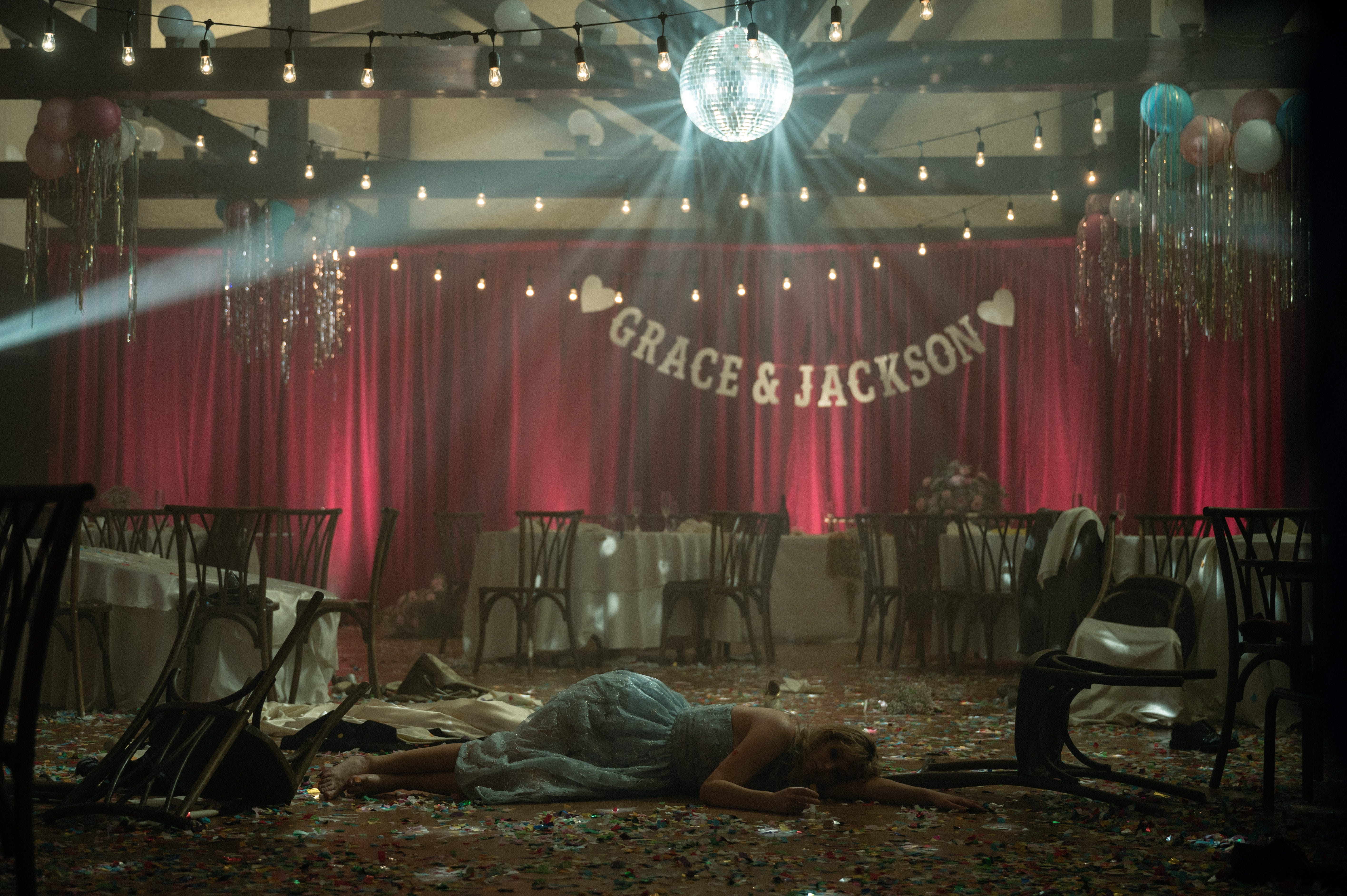
The price we pay for surrendering to our instincts is often connection. For Grace, it meant that allowing herself to fully be resulted in a troubled marriage and disconnection from the outside world. For us, it might mean disappointing people and detaching from our roots when we decide to go against the current in order to find ourselves, instead of the version that others want us to be. Speaking of instincts, we cannot forget that we are social beings and depriving ourselves of connection is against our nature—something Grace seems to confront in every uncompromising choice she makes.
Sometimes it’s necessary to fall apart to come together, to decay to the point of life. I find myself relating to Grace, envisioning cities collapsing and returning to nature at last. She becomes an archetype of womanhood, one in which surrendering to primal rage allows the untamed vastness of the earth to fill us with vital force, sparking the fire that brings us back to ourselves. However, fires must be contained if we don’t want our world to turn to ashes. Like Grace, we want to be bright, we want to be fierce, we want our fire to be alive—but if we’re not careful, instead of radiating warmth, we might burn everyone around us. Perhaps this act of containment is the act of performance—and in that sense, aren’t we always performing?
Die My Love is now streaming exclusively on MUBI in the US, Canada, and Australia. Get 30 days free at mubi.com/mapu and explore a carefully curated selection of films that will stay with you long after the credits roll :)
First of all, congratulations on this piece. It articulates with clarity something many people feel but rarely dare to name: the exhaustion of living as a performance and the strange emptiness that appears when that performance stops. The text succeeds especially in showing that this emptiness is not a failure, but a threshold — a moment where something more real can finally surface.
From an evolutionary perspective, this insight can be taken one layer deeper. What we call “performance” is not merely a social habit or psychological defense; it is a mechanical survival strategy. The human nervous system evolved to seek approval, predict reactions, and maintain belonging. Performing is not a moral flaw — it is an inherited optimization tool. We perform because, for most of human history, not performing correctly meant exclusion, and exclusion meant death.
Seen this way, stopping performance is profoundly destabilizing. It feels dangerous because, at a biological level, it is interpreted as danger. That is why the body reacts with anxiety, emptiness, or disorientation when roles fall away. The text implicitly points to this, but its power grows when we recognize that authenticity is not achieved by “trying harder,” but by allowing the nervous system to slowly learn that non-performance is no longer lethal.
In that sense, what emerges when performance stops is not a perfected self, but a quieter, more honest mode of being — one that no longer needs constant signaling to survive. This reframes vulnerability not as weakness, but as a recalibration of an outdated survival mechanism.
I agree with your assertion that the price of nonperformance can be the lack of connection with some people. However, I reject that the people you lose through nonperformance are people that are necessary to remain in your life. There are billions of people on this planet, many of whom do not require you to be anything other than yourself. Forcing yourself to remain in relationships that require you to pretend to be someone other than who you are is engaging with a self-damaging sunk-cost fallacy.
I haven't watched the film, so I'm not debating your analysis, merely responding to the statements included here.